

A guide to the Single Transferable Vote (STV) system
The Single Transferable Vote (STV) is a proportional voting system where voters rank candidates in order of preference. This type of system is currently used for elections for deputy speakers in the House of Commons, Northern Ireland Assembly and local elections in Scotland and Northern Ireland.
How does STV work?
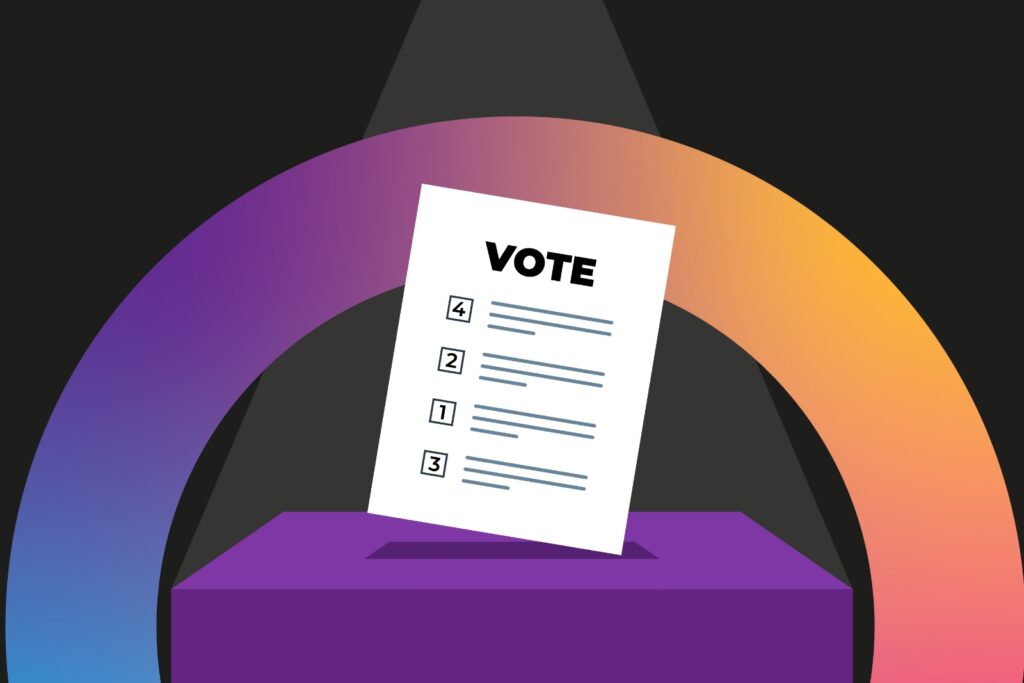
Voters using STV rank candidates in order of preference by marking one, two, three and so on. People can rank as many or as few candidates as they like. Each candidate needs to reach a set number of votes, called the quota, which is calculated based on the number of seats and votes cast.
First, all the first-preference votes are counted, and any candidate who reaches the quota is elected. This system means candidates don’t need a majority to win, and more votes contribute to the outcome.
Why does STV help reflect views of the electorate?
Under STV, fewer votes are wasted, meaning most voters help elect a candidate they support. This can make representatives more accountable to the people who voted for them.
In multi-member constituencies, parties may choose to put forward a balanced team of candidates in order to maximise the number of higher preferences that would go to their candidates. This goes some way to helping promote the advancement of women and ethnic-minority candidates, who are often overlooked in favour of a ‘safer’ looking candidate under ‘first past the post’.
Elected bodies with broader representation are more likely to be both reflective of the electorate’s views and more responsive to them.
In the 2022 Fife Council election, the SNP remained the largest party but still fell short of a majority, with Labour and Lib Dems holding significant seats too, illustrating how STV results in more balanced representation than winner-takes-all systems. Similar patterns were seen in Aberdeen City, Falkirk and Shetland Islands council elections, all held under STV in 2022, where councils ended up with mixed party make-ups and often no overall majority.
Parties are broad coalitions and can be markedly split on certain key issues. With only one party person per constituency, the representatives elected may not share the views of their electorate.
What are the other advantages of an STV voting system?
STV also gives voters more than one representative to approach after the election, increasing choice and encouraging elected officials to provide a better service to their constituents. There are no safe seats under STV, meaning candidates can’t be complacent and parties must campaign everywhere; not just in marginal seats.
When voters can choose to rank candidates, the most disliked candidate can’t win, as they are unlikely to pick up second, third and lower-preference votes. By encouraging candidates to seek first, as well as lower-preference votes, the impact of negative campaigning is reduced.
In the 2022 Scottish local elections, STV produced councils where no party had overwhelming majorities and candidates needed support beyond first preferences. This meant voters’ second and third preferences helped decide final outcomes, reducing the effect of purely negative campaigning and removing the need for tactical voting common under First Past the Post.
Under STV there is a more sophisticated link between a constituency and its representative. Not only is there more incentive to campaign and work on a more personal and local level, but also, the constituencies are likely to be more sensible reflections of where community feeling lies.

The disadvantages of STV
- In sparsely populated areas, like the Scottish Highlands, STV could lead to large multi-member constituencies. This was one of the reasons cited by the Arbuthnott Commission for not recommending STV beyond local wards.
- The process of counting the results takes longer under STV, meaning that results cannot usually be declared on the same night as the vote takes place.
- In the 2022 Northern Ireland Assembly election, votes were counted under the STV system and the count was not completed on the same day polling closed. While some first preferences were counted and seats declared by the afternoon of the first day, the full count continued. In some places, results were declared nearly two days after polling day although some of the blame of the slow speed was also attributed to Covid-19.
- A voting system that allows voters to rank candidates can be prone to what has been termed ‘donkey voting’, where people appear to vote for candidates in the order they appear on the ballot.
- Voters only tend to come into contact with candidates at election time, whereas people in the party know them much better. Some argue that a system that allows a political party to parachute its preferred candidates into safe seats is better than one that leaves the choice more in the hands of the voters.
How does STV compare with hybrid or online voting?
STV is a vote-counting system designed to create proportional representation, while hybrid and online voting are delivery mechanisms for how ballots are cast and processed. STV can be used with either paper-based elections, hybrid elections, or fully online voting platforms.
FAQs
Where is STV implemented?
STV is used in Northern Ireland and in local elections in Scotland, but it is also used in Malta, Australia (Senate), and parts of the US. STV elections are also used in a significant number of membership, charity, professional body organisations and NHS Trust elections in the UK.
Why do some countries use STV instead of first-past-the-post?stead of first-past-the-post?
Countries adopt STV to achieve more proportional results, reduce wasted votes, and give voters more meaningful choice. Unlike First Past the Post, STV elects representatives which may reflect a wider range of voter views.
Does STV take longer to count than other voting systems?
Yes! Counting is more complex because surplus and transferred votes must be calculated. Many regions use software to speed up the process.
Can independent candidates do better under STV?
Yes. Since voters can rank individuals without worrying about party vote-splitting, independents often have more opportunity to gain transfers and meet the quota.

How can voter turnout be increased?
Whether it is member engagement, achieving more candidates for nomination, or achieving increased voter turnout via postal ballots or online voting, PIN Communications is a trusted election services provider that will strive to make your election a success, every time.
For an independent assessment of your organisation’s electoral needs and impartial advice and guidance about the electoral system that best fits your requirements contact PIN.
Taking a tailored approach to elections, ballots, polls, AGMs, referendums and consultations, our democratic voting services and experienced team deliver impartial and transparent contests.

Contact us today by phone 0161 209 4800 or email contactus@pin-commmunications.com.
What we’ve been up to…
-
Delivered isn’t the same as remembered.
Discover how direct mail and digital channels can work together to create more…
-

In-house vs hybrid mail – what’s the difference and which is best for you?
Compare in-house vs hybrid mail. Discover how hybrid mail reduces costs, improves accuracy,…
-
AGM voting: postal, online & hybrid
Discover how postal, online, and hybrid voting methods shape effective, transparent AGMs. From…
-

The Advantages & Disadvantages of Using the Single Transferable Vote (STV) System
The Single Transferable Vote (STV) is a form of proportional representation voting system…
-

The Advantages and Disadvantages of Using the First Past-the-Post Voting System
FPTP is clear, simple and decisive in the majority of cases, but many…
-

Trade Union Indicative or Consultation Ballot
Before any industrial action or other significant trade union ballot, such as a…